Tribute to the Missile Man of India: APJ Abdul Kalam
Tribute to the Missile Man of India: APJ Abdul Kalam
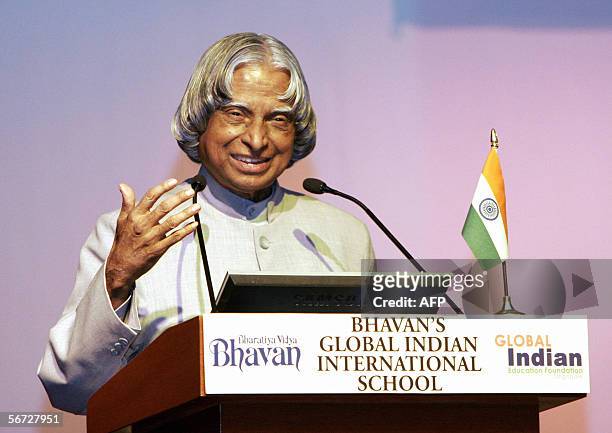
APJ Abdul Kalam, also known as the Missile Man of India, was a renowned scientist, engineer, and statesman who served as the 11th President of India from 2002 to 2007. He was born in Rameswaram, Tamil Nadu, in 1931 and grew up in humble surroundings. However, with his hard work and dedication, he rose to become one of the most respected and beloved figures in Indian history. Kalam played a pivotal role in the development of India's missile program and was instrumental in the successful launch of several satellites. He was a great visionary who believed in the power of science and technology to transform the lives of people. Despite his many accomplishments, Kalam remained humble and always put the welfare of his country and fellow citizens first. He was a true inspiration and his legacy continues to inspire generations.
 |
- Full Name: Avul Pakir Jainulabdeen Abdul Kalam
- Born: October 15, 1931, in Rameswaram, Tamil Nadu, India
- Died: July 27, 2015, in Shillong, Meghalaya, India
- Education: Bachelor of Science in Physics, Diploma in Aeronautical Engineering, and a Ph.D. in Aerospace Engineering
- Career Highlights: Scientist, Engineer, Professor, and Statesman; served as the 11th President of India from 2002 to 2007
- Contributions: Played a key role in the development of India's missile program and was instrumental in the successful launch of several satellites; authored numerous books on science, technology, and inspirational topics
- Awards and Honors: Received numerous awards and honors, including the Bharat Ratna, India's highest civilian honor, and several honorary degrees from universities around the world.
- Personal Traits: Known for his humility, simplicity, and dedication to his work and country; was a great visionary and a source of inspiration for millions of people around the world.
APJ Abdul Kalam was a remarkable scientist, engineer, and statesman who made significant contributions to India's missile and space programs. He was born into a poor family in Rameswaram, Tamil Nadu, in 1931. Despite his humble beginnings, Kalam was an excellent student and went on to earn a degree in Physics from St. Joseph's College in Tiruchirappalli. He then worked as a scientist at the Defence Research and Development Organisation (DRDO) and the Indian Space Research Organisation (ISRO).
Kalam's work in missile technology earned him the nickname "Missile Man of India." He played a key role in developing India's first satellite launch vehicle, the SLV-III, and the country's first indigenous guided missile, the Prithvi. He was also the chief architect of the Agni series of missiles and played a crucial role in the successful nuclear tests conducted in Pokhran in 1998.
In addition to his contributions to science and technology, Kalam was also an excellent writer and author. He wrote several books, including Wings of Fire, an autobiography that chronicled his journey from a small town in Tamil Nadu to the highest office in the land. His other books included Ignited Minds, India 2020, and My Journey: Transforming Dreams into Actions.
In 2002, Kalam was elected as the President of India, a position he held until 2007. During his tenure as President, Kalam focused on promoting education and scientific research and inspiring the youth of India. He was a source of inspiration for millions of people around the world and was known for his humility, simplicity, and dedication to his work and country.
Sadly, Kalam passed away on July 27, 2015, while delivering a lecture at the Indian Institute of Management Shillong. His death was a great loss to the nation, but his legacy continues to inspire generations of young people in India and around the world.
APJ Abdul Kalam's contributions to Indian science and technology were not limited to missile and space programs. He was also an advocate of sustainable development and worked to promote renewable energy sources in India. He believed that India's abundant solar and wind resources could be harnessed to meet the country's growing energy needs and reduce dependence on fossil fuels.
Kalam was also a strong proponent of education and believed that education was the key to a better future for India. He worked tirelessly to promote education, especially among underprivileged children, and was a strong advocate of using technology to improve the quality of education.
Despite his many accomplishments, Kalam remained a humble and down-to-earth person throughout his life. He was always willing to listen to the views of others and was known for his simplicity and kindness. He was a devout Muslim who was deeply committed to interfaith harmony and believed that all religions shared the same fundamental values of love, compassion, and service.
Kalam's life and work continue to inspire millions of people around the world. He was a true son of India who dedicated his life to serving his country and his fellow citizens. His legacy lives on, and his contributions to science, technology, education, and sustainable development will continue to benefit future generations for years to come.


Comments
Post a Comment